
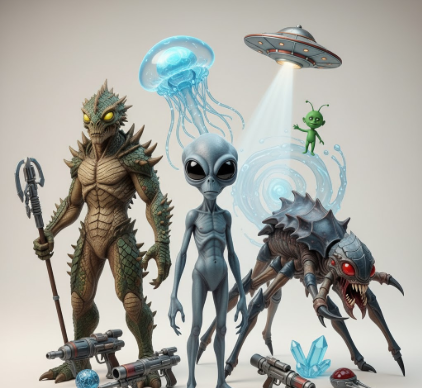
How We Have Portrayed Aliens in Culture

How We Have Portrayed Aliens in Culture World of watches
This request asks me to write an article that is at least 5000 characters long on the topic “How We Have Portrayed Aliens in Culture.” It has a number of strict constraints:Strictly unique text and do not write like AI (i.e., adopt a human, unique, and non-generic style).No title (start immediately with the text).Follow Google AdSense rules (no YMYL – Your Money or Your Life – themes). The topic “Aliens in Culture” is safe.Use specific tags only: p, strong, h2, h3, ul/ol/li, blockquote with classes check or warning.Include one blockquote (either check or warning) with 2 to 5 sentences.Do not use body or other unspecified tags.I will need to write the article in a compelling, human-like voice, focusing on the evolution of alien portrayals from early literature to modern cinema, covering themes like invasion, benevolence, physical appearance, and psychological impact. The cosmic question—Are we alone?—has haunted humanity since we first looked up at the stars. Long before telescopes or rockets, the notion of ‘others’ existing beyond Earth was a fixture of philosophical and theological debate. However, the true explosion of the alien concept into popular culture, defining and endlessly refining its visual and thematic identity, began in earnest with the dawn of science fiction. Our cultural portrayals of extraterrestrial life are less about biology and more about us: a shimmering, often distorted reflection of our deepest fears, our highest hopes, and the geopolitical anxieties of any given era.

The Early Years: Monsters, Martians, and Moral Panic

The nineteenth century gave us some of the first fully realized, culturally impactful extraterrestrial beings. Thinkers like Percival Lowell, mistakenly believing he saw intricate canals on Mars, fuelled a fascination with a potentially older, wiser, or perhaps more desperate Martian civilization. This groundwork was violently subverted by H.G. Wells in his seminal 1898 novel, The War of the Worlds. Wells didn’t give us friendly explorers; he delivered terrifying, technologically superior invaders. His Martians were monstrous: vast, pulsing brains, wet mouths, and tripod war machines, embodying the dread of unchecked imperialism turned back upon the colonizer. They were, crucially, inhumanely cruel and coldly logical, establishing the template for the ‘Alien-as-Conqueror’ that would dominate the genre for decades. This early depiction served a profound cultural purpose. It was a safe space to process anxieties about rapid technological change, the brutal realities of European colonialism, and the inherent fragility of human civilization. The Martians’ weakness—our common cold—was the ultimate, ironic twist, a reminder that nature is the great equalizer, a narrative device we still see echoed today. The early 20th century, particularly in pulp magazines, codified a different type of alien: the Bug-Eyed Monster (BEM). These creatures were often reptilian, insectoid, or tentacled, designed for shock value on a dime-store cover. They were simplistic villains, often characterized by a lust for Earth women or global domination, a clear reflection of the often-simplistic narratives and conservative values of the era’s popular entertainment.
The early ‘Martian’ trope, popularized by H.G. Wells, was less an exercise in speculative biology and more a direct commentary on the ethics of the British Empire’s colonial expansion. By presenting the Martians as ruthlessly efficient invaders, Wells forced his Victorian readership to momentarily experience the vulnerability and terror of the colonized, establishing a narrative framework where the extraterrestrial visitor serves as a powerful mirror for human societal failings. This narrative device continues to inform modern storytelling about first contact.

The Mid-Century Shift: Cold War Paranoia and Cosmic Hope

The mid-twentieth century, bracketed by the atomic age and the Cold War, dramatically altered the cultural blueprint for extraterrestrials. The invaders didn’t always arrive in visible ships; sometimes, they already walked among us. The 1950s saw the rise of the Infiltration Alien, creatures like the pod people in Invasion of the Body Snatchers. These aliens weren’t invading with heat rays; they were replacing us, stripping away our individuality and emotional capacity, an unmistakable allegory for the era’s profound fear of communism, conformity, and ideological subversion. However, this period also introduced the concept of the Benevolent or Observer Alien. In films like The Day the Earth Stood Still (1951), the alien Klaatu arrives not to conquer, but to warn humanity about its dangerous, self-destructive impulses (specifically, the development of nuclear weapons). This portrayal marked a significant shift: the alien was now sometimes the moral authority, the detached observer whose superior intellect and peaceful intentions stood in stark contrast to human aggression. These figures were often humanoid, clean, and stoic, suggesting that higher intelligence naturally leads to higher morality.

Physical Forms and Psychological Impact

Our visual lexicon for aliens solidified during this time. Two forms became dominant:
  • The “Greys”: The small, large-headed, almond-eyed, slender-limbed figures, popularized by alleged abduction stories starting in the 1960s (notably the Betty and Barney Hill case), became the most recognizable and enduring image of an alien. They are often associated with psychological horror, medical experimentation, and existential helplessness.
  • The ‘High-Evolutionary’: Often represented as luminous, translucent, or energy-based beings, these aliens (as seen in 2001: A Space Odyssey) are so far beyond us that their intentions are incomprehensible, tapping into humanity’s desire for transcendence and the fear of the utterly unknown.

Modern Depictions: Diversity, Empathy, and Bio-Horror

The late 20th and early 21st centuries have exploded the monolithic portrayal of the alien, reflecting a more complex, globalized, and environmentally conscious world. Aliens are no longer simply ‘good’ or ‘bad’; they possess nuance. Empathy and Connection: Steven Spielberg’s Close Encounters of the Third Kind and E.T. the Extra-Terrestrial shifted the focus from invasion to connection, portraying the alien as innocent, childlike, and seeking friendship. This portrayal taps into the countercultural optimism of the 1970s and 80s, framing first contact as a moment of wonder and mutual understanding, often seen through the eyes of a marginalized child. Bio-Horror and Ecology: The portrayal of the alien as a purely biological threat reached its pinnacle with Ridley Scott’s Alien (1979). The Xenomorph is not an invading army but a perfect biological machine, a terrifying metaphor for unstoppable predation and violation. It’s a creature driven purely by instinct and reproduction, devoid of human-like intelligence or morality, making it all the more chilling. This portrayal often bleeds into ecological themes, where the alien represents a perfect, cold natural order that views humanity as nothing more than a resource.

Deconstructing the Human-Alien Dynamic

Contemporary science fiction often uses the alien to deconstruct human communication and prejudice. Films like Arrival (based on Ted Chiang’s Story of Your Life) foreground the immense difficulty of understanding a truly alien consciousness, where language itself is the primary barrier. Other stories, like District 9, use the alien as a stand-in for refugees or marginalized groups, directly addressing themes of xenophobia, segregation, and resource conflict. In these modern narratives, the ‘alien’ is often a sympathetic figure, suffering under the weight of human fear and bureaucracy. The journey of the alien in culture—from Wells’s monstrous, tentacled Martians to the quiet, linguistic challenge of the Heptapods—demonstrates an evolving, complex relationship with the ‘other.’ It is a narrative tradition that continuously uses the vast, empty canvas of the cosmos to project and examine our most intimate human concerns. Ultimately, the alien is our great mythological constant. It is the perfect literary device to hold up a mirror to ourselves, allowing us to simultaneously imagine a world better than our own and contemplate the potential ugliness that might arise should we encounter a species truly different from us.
Dr. Anya Petrova, Cultural Anthropologist and Award-Winning Travel Writer

Dr. Anya Petrova is an accomplished Cultural Anthropologist and Award-Winning Travel Writer with over 15 years of immersive experience exploring diverse societies, ancient civilizations, and contemporary global phenomena. She specializes in ethnocultural studies, the impact of globalization on local traditions, and the narratives of human migration, focusing on uncovering the hidden stories and shared experiences that connect humanity across continents. Throughout her career, Dr. Petrova has conducted extensive fieldwork across six continents, published critically acclaimed books on cultural heritage, and contributed to documentaries for major educational networks. She is known for her empathetic research, profound cultural insights, and vivid storytelling, bringing the richness and complexity of global cultures to life for a broad audience. Dr. Petrova holds a Ph.D. in Cultural Anthropology and combines her rigorous academic background with an insatiable curiosity and a deep respect for the world's diverse traditions. She continues to contribute to global understanding through her writing, public speaking, and advocating for cultural preservation and cross-cultural dialogue.

Rate author
OneStopCool: Global Culture & Exploratio
Add a comment