Content
The Keeper of Unwritten Histories
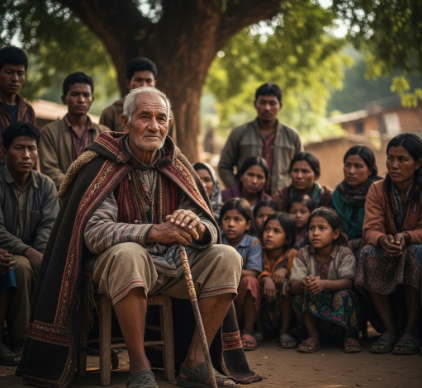
Before history was meticulously documented in books and digital archives, it was carried in stories, songs, and memories. The elder is the community’s living library. They remember the great flood of a generation ago, not as a data point, but as a story of loss, survival, and rebuilding. They know which fields yield the best crops because their parents and grandparents taught them, passing down agricultural knowledge fine-tuned over centuries of observation. This is not abstract information; it is practical, lived-in wisdom that ensures the community’s survival. Think of the intricate genealogies they hold in their minds, tracing the connections that bind families together. This knowledge isn’t for trivial gossip; it reinforces kinship, clarifies social responsibilities, and provides a powerful sense of belonging. When a young person wants to understand who they are and where they come from, they don’t turn to a search engine; they sit at the feet of an elder and listen. This oral tradition is the soul of the community’s culture, a vibrant tapestry woven from countless threads of shared experience.The Seat of Justice and Mediator of Peace
When disputes arise in a tight-knit community—a disagreement over land boundaries, a family quarrel, or a personal slight—the formal, often impersonal, legal system of the modern state can feel like a blunt instrument. This is where the elder’s role as a mediator and judge becomes invaluable. Their authority comes not from a legal degree, but from a lifetime of earned respect, integrity, and a deep, nuanced understanding of the people involved and the social dynamics at play. An elder’s court is not concerned merely with rules and punishment. The primary goal is restoration and reconciliation. They listen patiently to all sides, drawing upon a wealth of precedent from similar disputes in the past. Their judgment seeks to mend fractured relationships and restore harmony to the communal fabric. They understand that a verdict that leaves one party feeling defeated and resentful is not a true resolution. It is a form of justice that aims to heal the community, not just punish an individual.In many traditional societies, elder-led conflict resolution focuses on restorative justice rather than punitive measures. The process prioritizes repairing harm and reintegrating individuals into the community. This approach strengthens social bonds and prevents the escalation of conflicts, ensuring long-term stability and cooperation.
A Moral and Ethical Compass
Beyond settling disputes, elders serve as the moral compass for the village. They are the custodians of the community’s values, embodying the principles they teach. Through their actions, they demonstrate what it means to be a good neighbor, a responsible parent, and an honorable person. They are the role models who show, by example, the importance of honesty, compassion, hard work, and respect. When the community faces a difficult decision—whether to adopt a new farming technique or how to engage with outsiders—it is the elders who are consulted to ensure the choice aligns with their collective identity and ethical framework. This role is especially crucial in guiding the youth. Elders are the bridge between the past and the future, tasked with transmitting a sense of purpose and cultural continuity. They provide the young with a stable foundation, a set of values to navigate the complexities of life. This intergenerational connection is a powerful antidote to the alienation and rootlessness that can plague modern societies.Is There a Place for Elders in the Modern World?
It is easy to romanticize the past and dismiss the role of the elder as obsolete in an age of instant global communication and scientific expertise. Why ask an elder about the weather when a satellite can provide a precise forecast? Why rely on their memory when all human knowledge is supposedly a click away? This perspective misses the fundamental difference between information and wisdom. Information is data, but wisdom is the understanding of its human context and consequences. The challenges we face today—social isolation, environmental degradation, and a loss of community spirit—are not problems that technology alone can solve. They are, at their core, human problems that require human solutions. The elder represents a system of knowledge and social organization that is inherently sustainable and community-focused. Their wisdom offers profound lessons:- On Sustainability: They possess knowledge of local ecosystems and traditional practices that are often more sustainable than industrial methods.
- On Mental Well-being: Their role in fostering community cohesion provides a powerful buffer against loneliness and anxiety.
- On Conflict Resolution: Their focus on reconciliation offers a more humane alternative to adversarial legal systems.